Shirdi Sai Baba is revered by millions of devotees as a great saint whose life continues to inspire people with messages of faith, patience, compassion, humility and unity. According to the official history published by Shree Saibaba Sansthan Trust, Shirdi, Baba first appeared in Shirdi as a young man and spent the greater part of his life there. His presence transformed the lives of the people who came to him, and his spiritual legacy continues to inspire devotees even after his Maha-Samadhi in 1918.
What makes Sai Baba especially meaningful to people of different backgrounds is his message that God is One and that human beings should not be divided by religion, caste or creed. His life was simple, his words were direct, and his teachings were often expressed through everyday actions, stories, blessings and personal example.
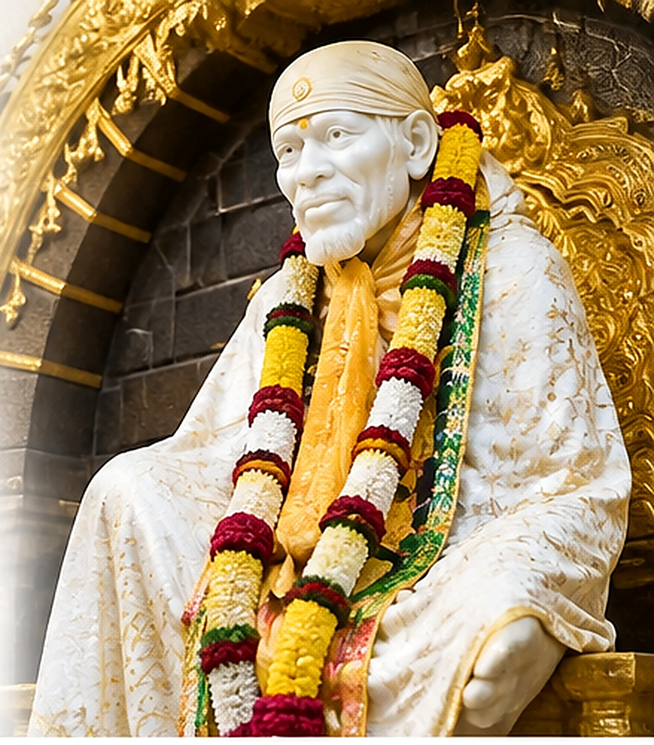
Early Life of Sai Baba
The official history of Shree Saibaba Sansthan Trust states that his parents, birthplace and other details of his early family life were not known with certainty. When people asked him about his origins, he did not provide the kind of ordinary biographical details they expected.
Sai Baba first manifested himself in Shirdi as a young lad of about sixteen, sitting beneath a Neem tree. Villagers were surprised to see the young ascetic practicing penance and remaining detached from worldly pleasures. The account describes him as calm, deeply spiritual and mysterious, attracting attention through his conduct rather than through self-promotion.
The history also records the belief that he had spent a long period in spiritual practice connected with his Guru. The exact identity of his Guru is not known with certainty, and the official chronology presents this part of his life as approximate.
His First Stay in Shirdi
During his first period in Shirdi, Sai Baba spent time near the Neem tree, a location that later became known as Gurusthan. According to the history recorded by the Trust, Baba remained in Shirdi for approximately three years during this early period. He then disappeared from the village for some time.
His early life continued to remain a mystery to the people of Shirdi, and many questions about where he came from and who his family was remained unanswered.
Sai Baba’s Return to Shirdi
After disappearing from Shirdi for a period, Sai Baba later returned with the marriage party of Chand Patil. The story of his meeting with Chand Patil is one of the well-known accounts associated with Baba’s early life.
Chand Patil had lost his mare and had been searching for it for a long time. According to the account on the official Shree Saibaba Sansthan Trust website, he encountered a fakir who directed him to search near a stream, where the lost mare was found. The fakir’s unusual actions and spiritual presence deeply impressed Chand Patil, who later invited him to accompany the marriage party travelling to Shirdi.
When the marriage party arrived in Shirdi, the young fakir stepped down near Khandoba’s temple. Bhagat Mhalsapati welcomed him with the words “Ya Sai,” and from that moment he became known as Sai Baba.
From a Young Fakir to the Saint Of Shirdi
After returning to Shirdi, Sai Baba remained there for an unbroken period of about sixty years until his Maha-Samadhi in 1918. He initially stayed near the Neem tree at the place now associated with Gurusthan and later moved to an abandoned mosque.
That mosque became known as Dwarkamai and became one of the central places associated with Baba’s life. People from many backgrounds came to meet him there. As his fame spread, increasing numbers of devotees travelled to Shirdi seeking his blessings, guidance and spiritual support.
Despite the growing reverence around him, Baba continued to live a simple and austere life. His simplicity was an important part of his example: spiritual greatness did not require material display.
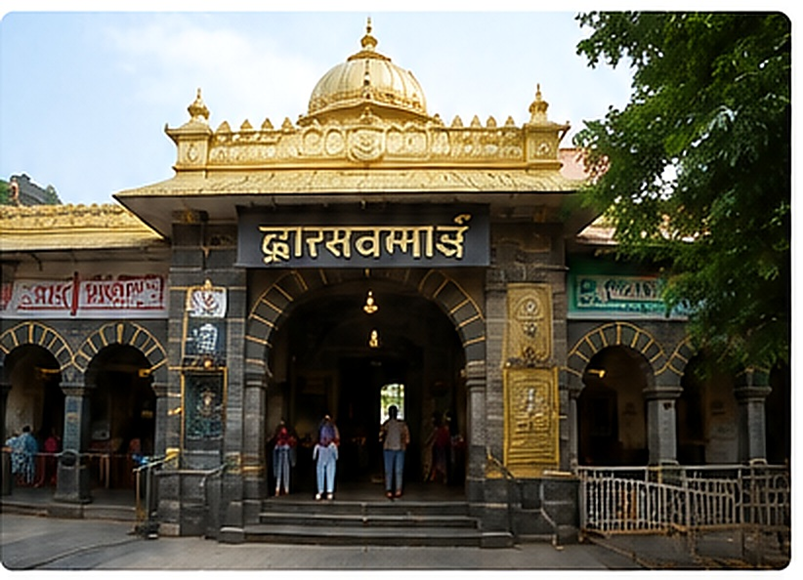
Image 2: Illustrative visual inspired by the entrance of Dwarakamai in Shirdi.
Even today, devotees consider Dwarakamai a symbol of protection and divine grace. Remembering Dwarakamai can inspire us to create the same feeling of acceptance and kindness within our own homes and communities.
Life Of Sai Baba
Sai Baba’s daily life was remarkably simple.He wore a simple Kafni, usually went barefoot and spent much of his time in and around Dwarkamai. He also went from house to house seeking Bhiksha, receiving food from people in the village.
The food he collected was placed in a common vessel, where birds and animals were also allowed to eat. This simple routine became an important part of his life in Shirdi.
The Growing Devotion of People
As the years passed, more and more people began visiting Sai Baba. People came to Shirdi from different communities and backgrounds. Some came seeking his blessings, some sought guidance during difficult moments, while others simply wished to spend time in his presence.
By the later years of his life, Sai Baba had become widely known, and large numbers of devotees travelled to Shirdi to see him. Even with this growing popularity, Baba continued to maintain his simple way of living.
Sai Baba’s Maha-Samadhi
Sai Baba spent the final years of his life in Shirdi. In 1918, he took Maha-Samadhi.
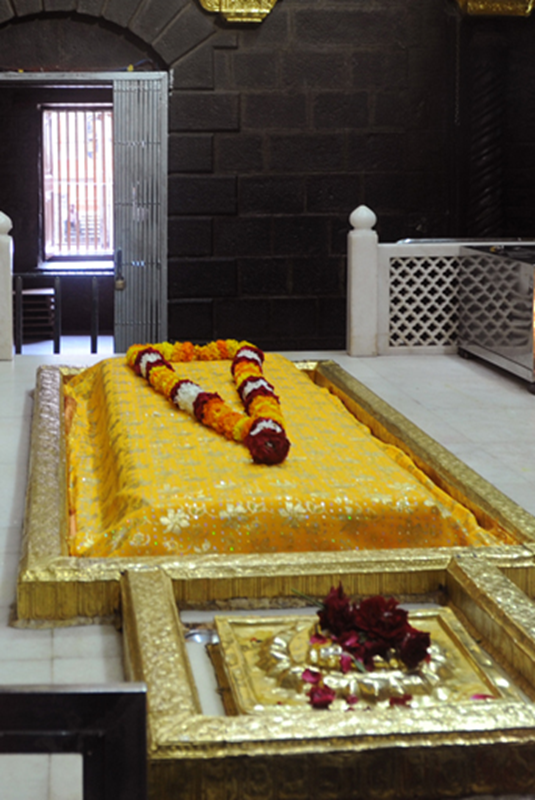
Although his physical life came to an end, his spiritual presence continued to inspire devotees. Shirdi gradually developed into an important pilgrimage destination, and people from different parts of India and around the world continue to visit the place associated with his life.
Sai Baba’s Message for Our Daily Lives
Sai Baba’s teachings remain meaningful even in today’s busy world.
He taught us to have faith when circumstances are uncertain, patience when answers take time, compassion toward those in need, respect for people of every faith, and gratitude for the blessings we receive.
These teachings can become part of everyday life. Helping someone in need, serving food, supporting a charitable cause, caring for family members, volunteering at the temple, or simply speaking kindly to another person are all ways of putting Sai Baba’s message into practice.
| ॐ | A simple way to live Baba’s teachings • Choose faith over fear. • Practice patience in uncertain moments. • Serve others without expecting recognition. • Treat every person with dignity and respect. |